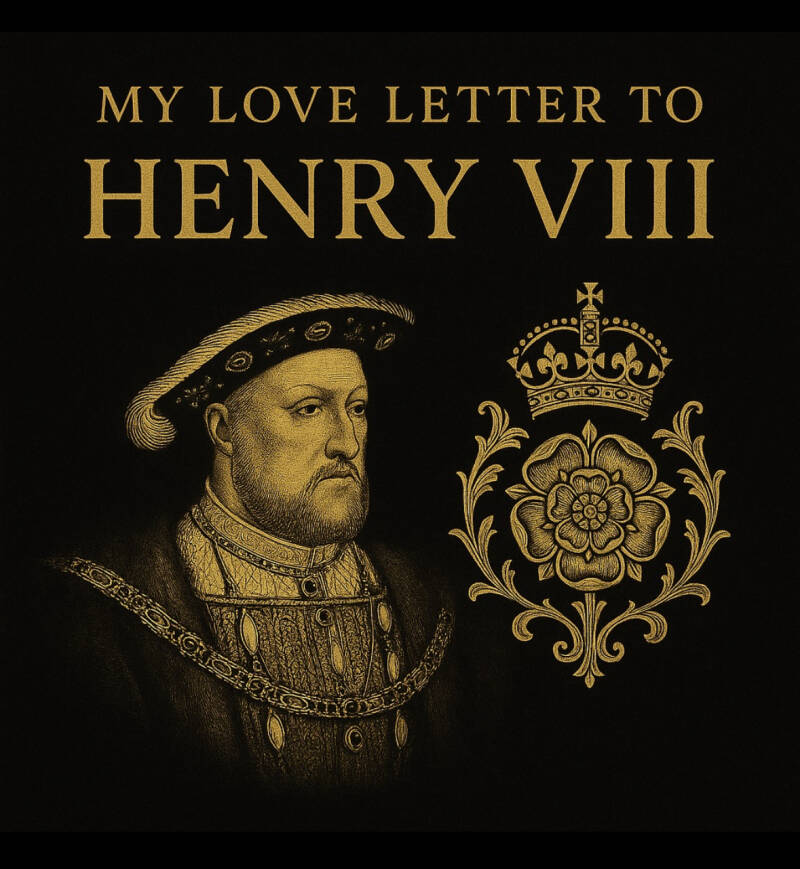
Henry VIII
Looking Past the Myths to Meet the Real King
What I am about to write about next is very personal to me. I studied Henry VIII at the University of Oxford (my first class was Henry VIII, and I passed!) but before that, I probably read every book ever written about him, both fiction and non. (Maybe not every book, but it is a lot. I can hear my bookcase from Ikea screaming from the other room.) Portions of what I will say here will come from the numerous papers and essays I had to write during the duration of my Oxford study, but a lot of it will come from me. I say that because while I do trust and love historians and their points of view, sometimes, I don’t think they get it all entirely right. I will say this until I am blue in the face; I am not a historian, nor do I claim to be. I do not discount those who have degrees and doctorates and do commentary on documentaries; but I have interpretations, too. Don’t come at me; just read and enjoy.
With that disclaimer out of the way, let’s rage.
Quick Intro:
Henry VIII, who reigned over England from 1509 to 1547, is often painted as a larger-than-life character. Most people remember him for his six wives, his break with the Catholic Church, and his reputation for being ruthless. But there’s way more to his story than what the rumors and history books usually tell us. To really get Henry, you have to look past the infamous stories and try to see what was going on in his world.
The Stereotype of Henry VIII
Ask someone about Henry VIII, and you’ll likely hear about a king who ate too much, made rash decisions, and chopped off the heads of wives who didn’t give him a son. Sure, he had his faults (and a big appetite), but this image leaves out a lot. The most famous depiction of him is the Holbein painting that literally makes him seem larger than life. (I stood next to the real painting at an exhibit at the Met in NYC. It is surreal to see it in person.) It’s easy to forget that he was dealing with huge political, religious, and personal pressures—that shaped his every move.
Why He Wanted a Son So Badly
Henry’s obsession with having a male heir is often misunderstood. Back in Tudor times, England’s peace relied on a clear line of succession. The country had barely recovered from a series of civil wars, and Henry was terrified of the chaos that could return if he didn’t have a son. It wasn’t just about his own ego—he genuinely worried about the future of England. Hence getting married six times. Seems like a solid plan to me.
The Break with Rome: Selfish or Smart?
People tend to see Henry’s split from the Catholic Church as an act of pure stubbornness because he wanted a divorce. That’s part of it, but there was more at play. By breaking away, Henry took control from foreign powers, secured church wealth for his government, and strengthened his own authority. These moves were risky, but they were also practical solutions to the challenges he faced. He pretty much told the Pope to “eff around and find out.” The Pope found out. That is a level of petty I can get behind.
Changing Religion—and England Forever
Henry’s church reforms are often called selfish, but they had long-lasting effects. By establishing the Church of England, he started a chain of events that led to more religious variety and eventually, a unique English identity. Even if he was motivated by personal and political reasons, he was also part of a bigger movement in Europe that questioned old traditions. 500 years later, the Church of England dominates the religion of England.
The Man Behind the Crown
It’s easy to see Henry as just a villain, but he had many sides. He was a talented musician, loved sports as a young man, and was a big supporter of the arts and learning. His court was buzzing with creativity and new ideas. A lot of his tough decisions were shaped by the high-stakes world he lived in, not just by personal whim.
Conclusion
Henry VIII wasn’t a perfect king but calling him only a tyrant misses the point. He made tough calls because he had to deal with real threats—dynastic trouble, religious shifts, and the constant need to stay in control. Sure, he could be ruthless, but he was also a strategic thinker trying to secure England’s future. If we take a closer look, we find a much more complicated—and interesting—king than the one we usually hear about.
Okay. We have a lot to unpack here.
So it is important to mention that Henry VIII wasn’t born to be the King of England. He was the second son of Henry VII and Elizabeth of York. His older brother, Arthur, the Prince of Wales, unfortunately died early at age 15 from an unknown illness. He was only 6 months into his marriage to Catherine of Aragon, the daughter of King Ferdinand and Queen Isabella of Spain. So Henry VIII became the heir apparent.
But if we take a look at Henry’s childhood, we can make some valid assumptions that formed who he became in his adulthood. He was the second son; that meant he wasn’t raised to learn kingship. That being said, all accounts say that Henry was intelligent, knew a few different languages, he was athletic and loved all the medieval pastimes that one would enjoy (dancing, hunting, etc.) His father had the intention of giving his second son to the church, so by default Henry VIII was very religious (as most were at the time).
Royal children didn’t live with their parents; Henry and his siblings (except Arthur) were raised in another palace and only saw their parents when they visited the children. And that wasn’t every day. There isn’t a lot of documented evidence on Henry’s daily life as a child, but we do know he held his mother Elizabeth of York in very high esteem. It is said that she was the one that taught him to read and write and managed his education with tutors. That tells me she probably visited the kids more than the King did; and it also tells me that is probably how his attitude toward women was formed.
You think now that I am going to go on about how he hated women. He 100% didn’t.
To all six of his wives, he was a “good” husband. I say “good” because that is up for interpretation. But all in all, he had a favorable view of women. His childhood household consisted of nannies, his sisters, and occasionally his mother. He most likely was doted upon as the “man of the house” and was the coolest thing ever to a household of women, but since he wasn’t the one that was going to be the next king, he kind of wasn’t important. I try to think about what that must have felt like for him. To be raised being told he was smart, he was athletic, and godly, but then being pushed aside because his older brother was the more important one. It is kind of a conflicting self-ideology to develop; he was good enough, but not good enough to be king. Just because he wasn’t born first.
Until he was the important one.
When Arthur died, it took a huge toll on Henry VII. Not long after, Elizabeth of York died after giving birth to another princess (she passed too). So now, Henry VIII lost his brother (who he barely knew), his mother (whom he adored), and was thrust into the nation’s expectations of being the heir to the throne. If I am right about Henry VIII’s childhood being confusing when it came to understanding who he was, then he was more than ready to take over the crown. But his father, trying to navigate through his grief, kept his son close. Not emotionally close; meaning he didn’t let him start to try his hand at leadership or to do anything important at all. This was different in how Arthur was treated; Arthur was shipped off to the Welsh marches and lived in Ludlow Castle as the Prince of Wales. Henry VIII stayed at home; with nothing to really do but hone his skills at hunting, archery, languages, philosophy, music, dancing and galivanting with his friends (the ones that were allowed to be around him). Everyone in the court knew he was their future monarch, so they treated him with due respect. Basically, he was spoiled.
By this point, Henry VIII was a teenager. I know that probably while reading this, you are picturing the image of Henry that is the most famous. The heavy, bearded man standing like the imposing god the painting was meant to depict.
So now I may shock you.
Young Henry VIII was not that man that we are taught to recognize. I mean, he was later, but not when he was a young teen on the verge of becoming the Renaissance king.
It is said that around 1515, Henry was 6’2”, around 200 pounds with an athletic frame, and was considered the most handsome “sovereign in Christendom”. His complexion was fair, and his hair was auburn red. (Which second born son of our modern day does that remind you of? No, I will not say his name, but to give you a hint, I’ve said his given name about a hundred times so far.)
So then Henry VII dies, and obviously Henry VIII becomes king. What was one of the first things he did? He married his brother’s widow, Catherine of Aragon who became Wife #1. It’s kind of weird right, that he marries his dead brother’s wife? Well, they thought so too back then but all they had to do was obtain a dispensation from the Pope to marry without it being incestuous. It also helped that Catherine claimed her marriage with Arthur was never consummated because he was sickly throughout their six-month marriage. The best part? Everyone believed her.
Ok girl, whatever you say. (I will talk more about that in another post.)
Henry and Catherine’s marriage was seemingly happy (at least in the beginning.) Yeah, she was his brother’s widow, but Henry believed their union was pure destiny. It took nearly two decades for him to realize that she was way more principled, popular, and politically savvy than he bargained for. When Catherine refused (or more likely was unable to) give him the son that he thought he deserved (she just gave birth to the future Mary I, no big deal, right) – or roll over for his wandering eye- Henry launched the world’s most dramatic breakup: an annulment request that turned into a spiritual crisis, a political tantrum, and eventually a whole entire church. Catherine, to her credit, stayed dignified; Henry, not shockingly, stayed delusional. And that, kids, if how England got the Reformation because one single man couldn’t take “no” for an answer.
Enter Wife #2. Anne Boleyn.
Once Henry finally pried himself loose from Catherine (through a combination of ego, theatrics, and national religious remodel), he catapulted straight into his next grand obsession – Anne. If Catherine was the dignified Queen who told him “No”, Anne was the brilliant firecracker who made “not yet” a royal strategy.
It wasn’t that Anne was just able to catch Henry’s eye; she rewired the man’s entire brain. While he was trying to end his marriage to Catherine, he chased Anne like a lovesick poet, promising her everything, the crown, riches, and including eternal devotion. However, the moment she couldn’t produce a son on demand (she just gave him another “useless daughter”…who would one day become Elizabeth I), he flipped the script. Their marriage was dazzling, dangerous, and destined to implode. He traded the poetry for paranoia, and the woman that was his obsession went from Queen to convicted traitor faster than Henry could say “Next!”.
Now we are at Wife #3. We’re having a good time, no?
With Anne’s downfall executed (literally), Henry did not waste any time mourning. Before Anne’s head was even thrown into the box with the rest of her body, Henry had discovered Jane Seymour: the quiet lady-in-waiting who managed to be exactly what Henry wanted after two queens who had the audacity to have personalities.
Jane played the Tudor game like a soft-spoken pro: demure enough to soothe Henry’s ego, strategic enough to offer him hope of the ONE THING he wanted more than love: a male heir. She delivered the long-awaited son, earned the title of “the one he truly loved,” and then dipped. She actually died of postpartum complications, but I think she may have dodged a bullet. Or more likely, the executioner’s axe.
After Jane’s death, Henry was grieving (and by grieving, I mean he briefly sulked until he remembered he was single again). He decided (or his advisors decided) that it was probably the perfect time to enter the European marriage market. He had a son, so why not start making some foreign alliances?
We meet Wife #4. Anne of Cleves.
Anne was shipped from Germany and arrived in England ready to be Queen; Henry was ready to complain. Their initial meeting didn’t go well according to Henry’s court rom-com standards, and he decided she wasn’t pretty enough, charming enough, or basically “Henry enough” for his taste. And rudely enough, he told everyone she smelled. Ther marriage was an awkward, unconsummated political speed bump that lasted six months before Henry traded her in. But Anne was clever. She walked away with a generous settlement, her head intact, and the title of “King’s Beloved Sister”. In other words, she divorced Henry AND won.
Following the most awkward marriage in royal history, Henry decided he needed someone younger, livelier, and more flattering to his aging ego. Enter Wife #5, Catherine Howard.
This Catherine was a teenager, who made the 49-year-old king feel like he was in his prime again…even if it was only in his imagination.
Catherine was charming, fun, and wildly unprepared to be Queen to a man who was old enough to be her grandfather. While Henry (constantly) showered her with jewels and declarations of youthful rebirth, Catherine was quietly entangled in a web of past romances and very preset mistakes. When her history (and her extracurriculars) caught up with her, Henry swung from “blushing newlywed” to “deeply betrayed monarch” with terrifying speed. She ended up on the scaffold at nineteen – proof that in the Tudor court, being too young or too lively could be hazardous to your head.
How does one follow that disastrous finale? When you’re Henry VIII, you get married again.
Wife #6 was Catherine Parr. She was intelligent, less “teenage whirlwind” and more “competent adult with survival instincts”. Catherine was a widow two times over by the time she married Henry, which was not out of passion, but out of a sense of duty, diplomacy, and perhaps only a mild lapse in judgment.
At this point in his life, Henry needed more of a caretaker than a wife, and Catherine fit the bill. She kept his court functioning, she nursed him, soothed his temper, managed his children, and still found time to write books and advocate for religious reform. Catherine did nearly talk herself into the executioner’s schedule once, (pro tip: never debate theology with a paranoid King), but she skillfully charmed her way back into favor. By the time Henry VIII died, Catherine Parr had outlasted the Tudor hurricane, steered the royal family toward stability, and walked away a survivor. She was his final wife…and the only one who truly won the long game.
When we talk about Henry VIII, it’s tempting to focus on the headlines, which I think I touched on thus far: the six marriages, the religious earthquake, the executions, the infamous temper. But what I care about, and what the intention of this blog post is, is to look more closely at him. Not the legend, not the villain, but the MAN. After doing just that, I started to see the story of a king who’s mental and emotional world unraveled right alongside his physical health.
It is important to note here that historians don’t – and can’t – formally diagnose Henry VIII, and I am not going to try, either. But there are patterns in his behavior that raise big questions about his physical health, trauma, and absolute power shaped his mental state over time.
It is almost like we’re studying two different men. Young Henry VIII was pretty much the Tudor version of a Disney prince: charming, athletic, well-read, eager to impress and genuinely adored. But Henry VIII of the 1540s? That was someone else entirely. And bridging the gap between these two versions tells us more about his state of mind than any execution list ever could.
One of the biggest turning points came in 1536, when Henry suffered a catastrophic jousting accident. He was unconscious for hours, most likely had a concussion, and lived the rest of his life with chronic headaches, dizziness, and mood swings. Pair that with an infected leg that never healed, constant pain, and a ballooning waistline, and you have a monarch battling both physical misery and the ego-crushing reality of aging in a world that worshipped virile kings.
Henry was also a man terrified of failure. His obsession with a male heir wasn’t just vanity; it was survival anxiety dressed in royal velvet. Every miscarriage, every still birth, every daughter-to-be was a blow to his pride, his masculinity, and the dynasty he believed he alone had to secure. And in a court where no one dared to question him, those insecurities went unchecked and eventually metastasized into paranoia. I will mention again, I am not diagnosing a 16th century king, and I am not a doctor. But it really seems like Henry VIII had anxiety disorder. Iykyk.
By his later years, Henry swung wildly between affection and fury. He idealized people (his wives, ministers, friends) until the moment they disappointed him. Then the pendulum crashed in the opposite direction with frightening speed. Absolute power didn’t corrupt him so much as it isolated him, trapping him inside a feedback loop of fear, rage, and self-protective cruelty.
TO WRAP THIS UP
None of this excuses his actions. But it does remind us that behind the throne was a deeply complicated man – wounded, aging, anxious, impulsive, and living in a world where his word was law. It also reminds us that we can’t judge the actions of someone that lived 500 years ago with our modern eyes. Starting now, take the word “tyrant” out of the description of Henry VIII. His mental landscape shaped the Tudor age as much as his politics did. And sometimes, when you trace the arc of his life, you realize the most dangerous thing about Henry VIII wasn’t his temper or his ambition.
It was the fact that no one dared to tell him he was wrong.
Loving Henry VIII as my favorite monarch doesn’t mean I excuse him. It means I understand him. For me, he isn’t a hero, he’s a historical study. A walking contradiction. A Renaissance prince who suffered with personal and health issues that affected his actions. A man whose personal insecurities reshaped an entire nation. And that complexity is what fascinates me.
Most monarchs follow patterns. Henry VIII breaks them.
He is the only king whose marriages ARE his politics. His reign forces us to confront how personalities can change the course of history. It shows us how a jousting accident, chronic pain, fear, and absolute power an transform someone from charismatic prince to paranoid despot.
Henry VIII is a reminder that history isn’t clean or comfortable. It’s human.
You don’t have to approve of Henry VIII to find him captivating. And that is the entire point.
My fascination isn’t admiration persay; it’s curiosity. It’s complexity.
It is the irresistible pull of a monarch who changed everything- for better and for worse.
And honestly? If you can survive six marriages, break with Rome, dismantle monasteries, rewrite succession laws, and still leave people arguing 500 years later, you’ve earned a spot as someone’s favorite.
And Henry VIII is mine.
::curtsies in American::
Add comment
Comments